How to Plan a Corporate Offsite in Dubai- 2026 guide
Dubai has quietly become the offsite capital of the Middle East. Walk into any decent venue between October and April and you’ll find a Berlin SaaS team, a Mumbai consultancy, and three Riyadh agencies all running corporate offsites in adjacent rooms. The reasons are practical: easy flights from 200+ cities, a year-round climate that beats most Northern Hemisphere alternatives, and a venue scene that has matured fast in the last five years.
But planning a corporate offsite in Dubai is not the same as booking a meeting room. Get it right and your team comes back recharged, aligned, and shipping faster. Get it wrong and you burn AED 80,000 on bland ballroom coffee and a corporate mood you could have created in your own office.
This guide walks through everything you need to plan a Dubai corporate offsite — from the right time of year to the agenda template, the budget breakdown, and the dozen logistical traps that trip up first-timers. It’s written for HR managers, ops leads, and founders running offsites for teams of 20 to 80.
Why Dubai is the right offsite destination in 2026?
Three reasons keep coming up when teams choose Dubai over alternative offsite cities.
It’s central for hybrid and regional teams. Dubai sits at a four-hour flight radius from most of MENA, India, the Gulf, and East Africa, and a six-hour flight from European hubs. For distributed teams, no other regional city has this kind of reach.
The infrastructure is offsite-ready. Five-star hotels saturate the market, which keeps prices realistic. Emirates, FlyDubai and Etihad run direct routes from over 200 cities. The Metro and Careem cover the city. WiFi is fast everywhere, including outdoors.
The venue scene is no longer just ballrooms. A wave of independent corporate event venues in Dubai — gardens, warehouses, lofts, rooftops — has opened in the last few years across Al Quoz, Alserkal Avenue, Jumeirah and Business Bay. You can finally host a corporate offsite that doesn’t feel corporate.
The best months to plan your offsite are October through April. May to September is too hot for any outdoor component 35–45°C, which removes about half the venue options and makes outdoor activities a non-starter.
How to budget a corporate offsite in Dubai
Most Dubai offsites land somewhere between AED 600 and AED 2,500 per person per day, all-in. Where you land depends on whether the offsite is single-day or multi-day, whether it includes accommodation, and how much external facilitation you bring in.
A useful per-person breakdown for a one-day corporate offsite in Dubai:
| Line item | Range (AED per person) |
| Venue hire + meeting room | 200–500 |
| Catering (lunch + 2 breaks) | 200–350 |
| AV and tech | 600-1800 |
| Activity or external facilitation | 200–800 |
| Local transport | 50–150 |
| Buffer (10–15%) | 60–200 |
| Total per person | 710–2,150 |
Two budgeting tips that save money:
- Ask for full-package quotes, not line items. Better venues will quote one number that includes venue, AV, catering, basic styling and a dedicated event manager. Line-item invoicing is where budget overruns hide.
- Quote in writing, in AED, with VAT clearly broken out. UAE VAT is 5%. Some venues quote ex-VAT and some include — confirm before signing.
If you’re flying a team in, accommodation is usually 40–50% of the offsite budget, so book hotels first. Aim for one hotel within a 15-minute drive of the offsite venue — splitting across multiple hotels is a logistics tax you’ll pay all day.
What kind of venue fits your offsite goal?
The biggest mistake first-time offsite planners make is matching the venue to the team size, not the agenda. Capacity is necessary but not sufficient. Match the space to what you actually want people to do.
- Hotel ballroom. Formal, predictable, soulless. Works for keynote-heavy days. Stops working the moment you want movement, breakouts, or any “this doesn’t feel like work” energy.
- Co-working space or business center. Cheap, functional, no character. Fine for a half-day catch-up, terrible for a multi-day kickoff.
- Private dining room at a restaurant. Fine for a 20-person leadership lunch, won’t take you past that. Limits agenda flexibility because you’re paying per cover.
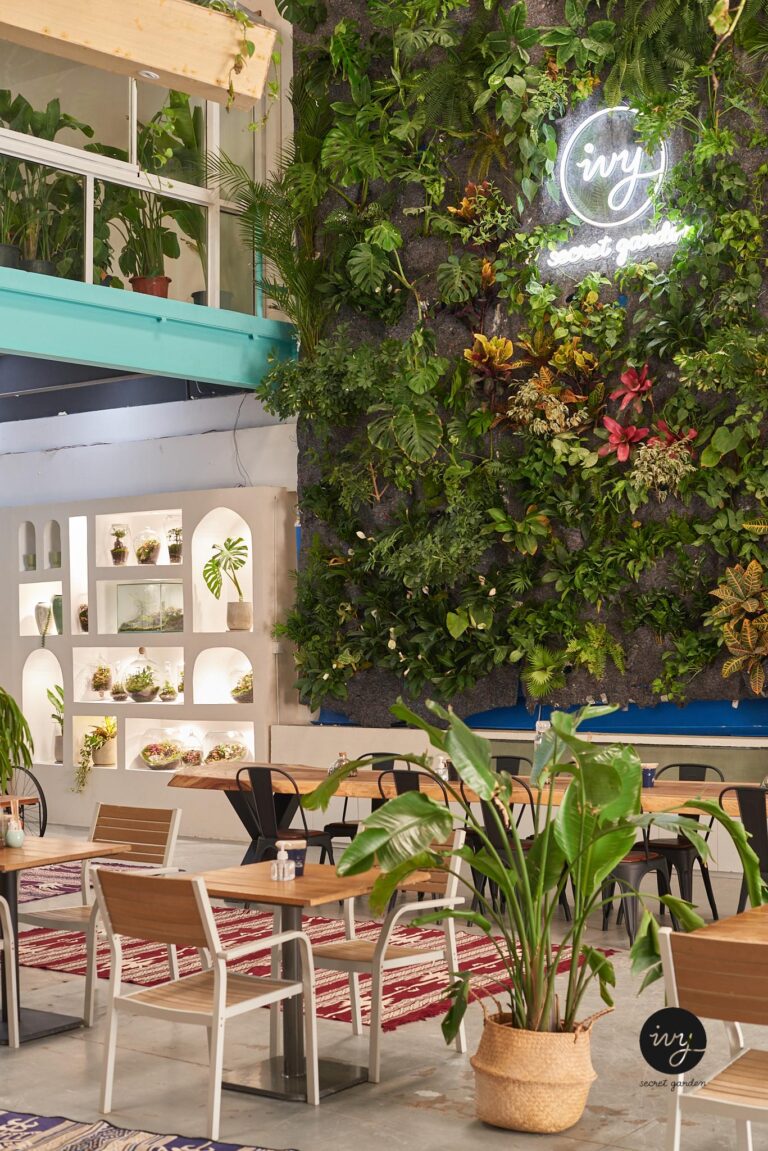
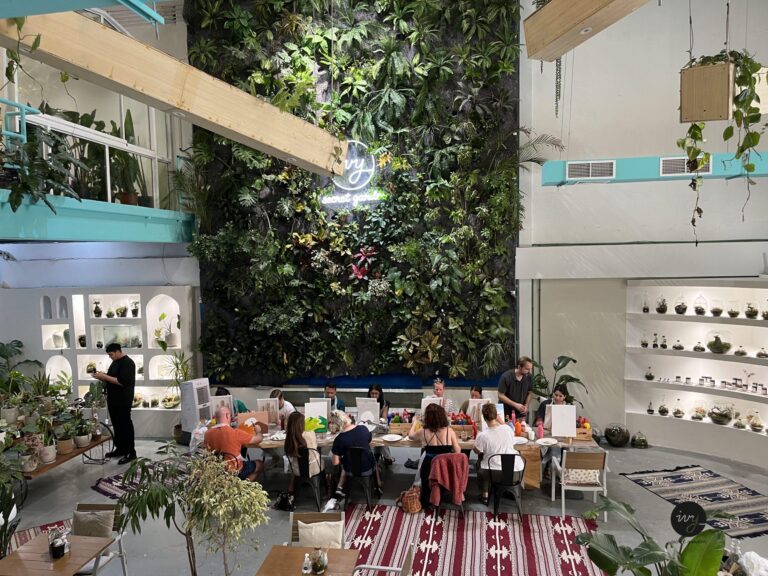
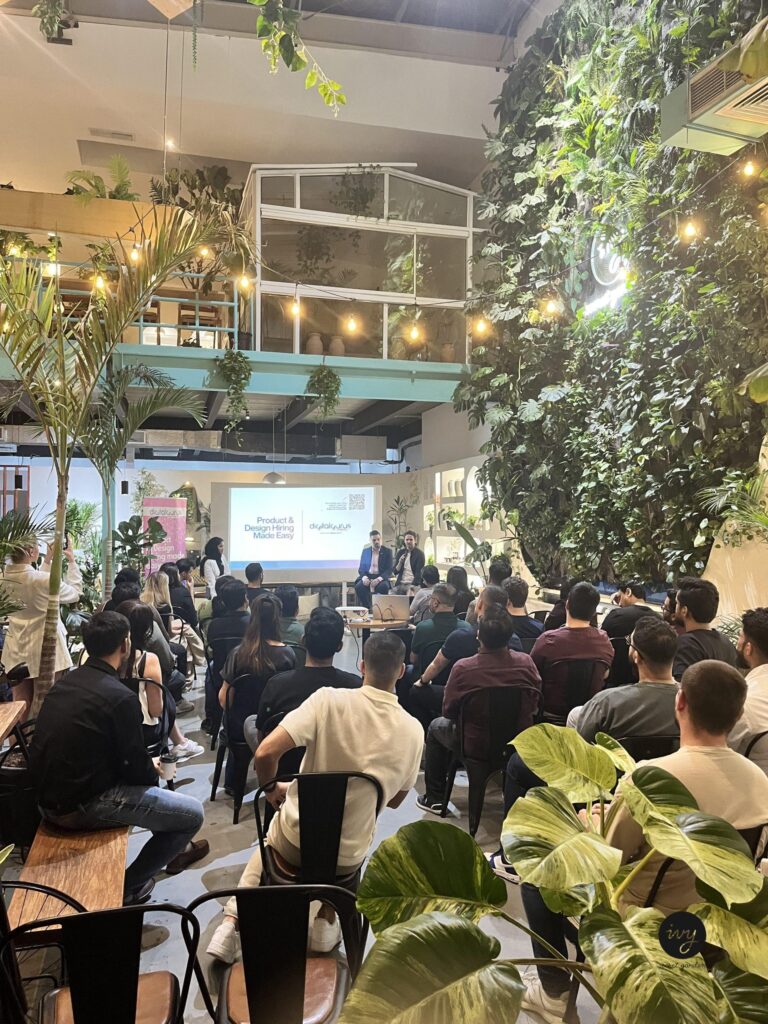
Boutique event venue. Gardens, warehouses, repurposed villas. This is where most teams should look for an offsite that genuinely lifts the team mood. The catch is they’re harder to find — Google still over-ranks the hotels — but venues like Ivy’s Secret Garden (a flexible indoor corporate offsite venue in Dubai accommodating 20–80 guests) have purpose-built layouts for everything from morning workshop to evening cocktail mixer in the same space.
The flexibility piece is underrated. A space that adapts from boardroom configuration in the morning to evening layout saves you from booking two separate venues for a single offsite day, and it lets the team’s energy build through the day in one continuous experience rather than breaking around a transit gap.
Building the agenda — templates that work
The most common offsite mistake is over-programming. A great offsite has roughly 60% planned content and 40% slack — the unplanned 40% is when the team actually connects.
Half-day template (4 hours)
- 09:30 — Arrival and breakfast (45 min)
- 10:15 — Year ahead / vision presentation (45 min)
- 11:00 — Break (15 min)
- 11:15 — Three breakouts (60 min)
- 12:15 — Synthesis and commitments (30 min)
- 12:45 — Lunch and depart
Full-day template (8 hours)
- 09:00 — Arrival and breakfast
- 09:45 — Welcome and ground rules (15 min)
- 10:00 — Looking back / retrospective (90 min)
- 11:30 — Break and walk
- 11:45 — Looking forward / strategy (90 min)
- 13:15 — Long lunch (75 min, deliberately)
- 14:30 — Workshop or activity (90 min)
- 16:00 — Break
- 16:15 — Commitments and closing (45 min)
- 17:00 — Drinks and wind-down
Two-day template
Day 1 is for hard work — strategy, retros, decisions.
Day 2 is for activities, team-building, and informal time.
The temptation is to invert this. Hard conversations work better when the team is rested, and team-building works better when there’s nothing hanging over the room.
Food and drink — what works for Dubai corporate teams
Three things to know about catering a corporate offsite in Dubai.
Halal is the default. Don’t ask whether the venue can do halal — every reputable one does. Do ask explicitly about pork and alcohol if you have international team members who expect them on the menu.
Plan for dietary diversity at scale. A typical 50-person Dubai team will include vegan, vegetarian, gluten-free, dairy-free and nut-allergy diners. Brief the venue with a dietary count before signing the catering brief, not after.
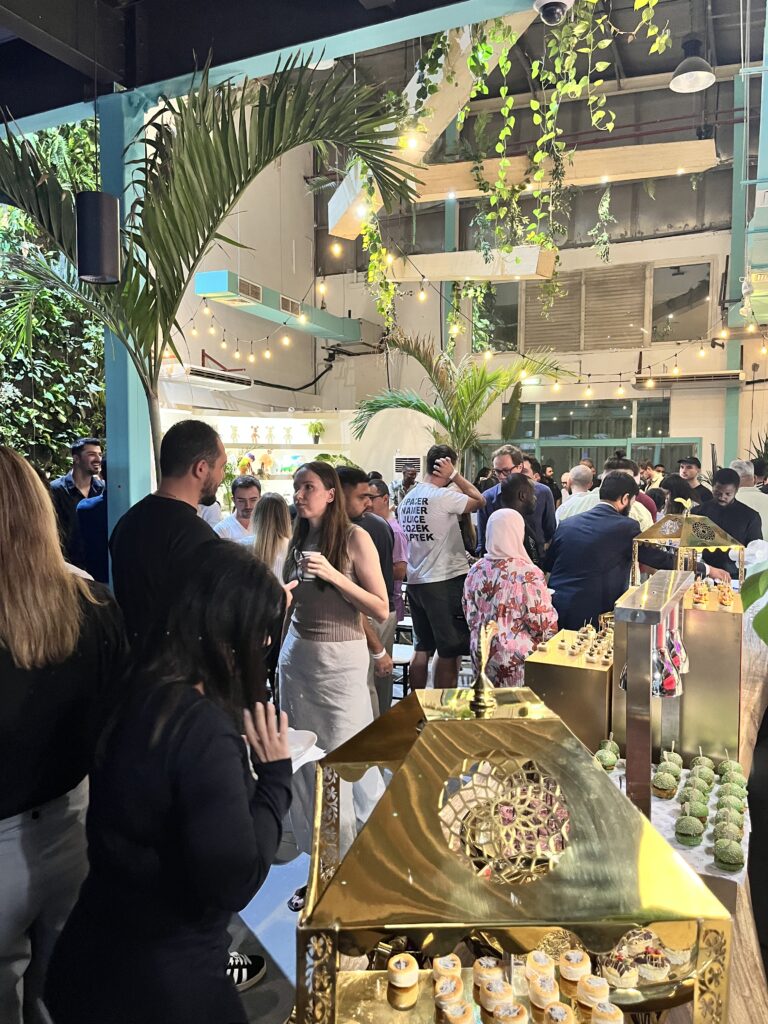
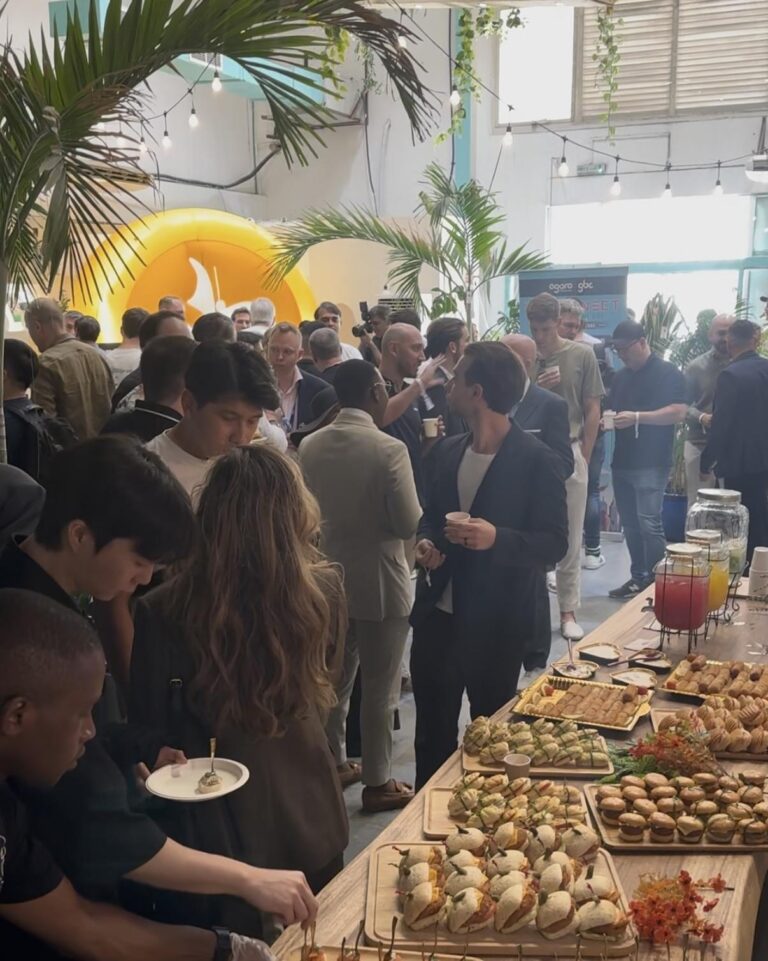
For evening receptions, cocktail-style beats banquet. A traditional banquet locks people into seats and to whoever sits next to them — exactly what you don’t want at a networking moment. Standing receptions with passed canapés and food stations encourage circulation. This is the format that turns a colleagues-and-coffee vibe into something people actually remember.
If you’re running a multi-day offsite, vary the food formats: one breakfast at the venue, one off-site lunch (a restaurant the team wouldn’t normally go to), one casual dinner. Repetition kills morale faster than mediocre food.
Activities and team building — the realistic options
Dubai’s team-building market is full of expensive packages that look great in brochures and underwhelm in practice. The activities that actually work for a corporate offsite:
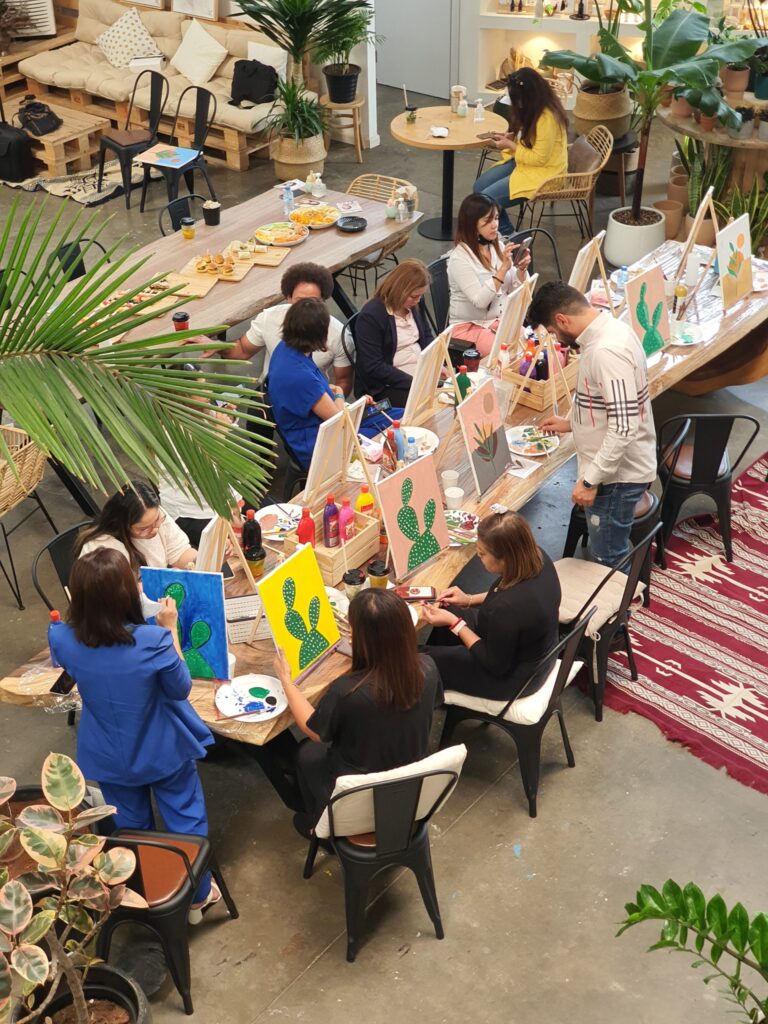
- Cooking class. Universally well-rated, low physical demand, easy to slot into a half-day. AED 250–500 per person.
- Desert experience. Only if you have a half-day to spare. Dune drive plus camp dinner is a strong end-of-offsite finale, but cuts deeply into agenda time.
- Boat charter. Works well for 20–50 person teams, particularly if you want a sunset reception that doesn’t require a venue at all. AED 4,000–15,000 depending on size.
- Workshop facilitation. Bring in a third-party facilitator for any offsite where the goal is team alignment or strategy. Worth every dirham. Local Dubai facilitators run AED 8,000–25,000 per day.
What to avoid: expensive paintball or escape rooms (low engagement after age 30), any activity requiring a 90-minute commute each way, anything that ends in “and then a motivational speaker.”
Logistics — the things that always go wrong
A list of small things that derail otherwise well-planned offsites:
- Parking. DIFC and Downtown venues are parking nightmares. If you’re booking somewhere central, arrange valet or designate a nearby car park. For team transport, Careem Business has corporate accounts that handle 20–30 simultaneous pickups cleanly.
- Transport between hotel and venue. Three hotels and three Careem cars is a recipe for someone arriving 40 minutes late. Book a single coach for groups over 15 — it’s cheaper and more reliable.
- AV. Always over-spec. Confirm in writing: HDMI plus USB-C adapters for every laptop type, two wireless mics, a backup laptop, and someone on-site for the day. The number of offsites that lose 30 minutes to “the projector won’t connect” is staggering.
- Photographer. Hire one for half a day. Photos of an actual team in flow are gold for LinkedIn, employer branding and your next offsite’s pitch deck. AED 1,500–4,000 for half a day from a Dubai event photographer.
A 6-week corporate offsite planning timeline
For a single-day offsite, six weeks is comfortable. Two-day offsites or any team over 80 people need eight to ten weeks of lead time.
- Week 6: Confirm dates, get exec sign-off on budget, build a shortlist of three venues.
- Week 5: Visit two venues, choose one, sign the contract. Lock in catering at the same time.
- Week 4: Draft agenda, brief the facilitator (if external), confirm hotel block.
- Week 3: Send team comms — calendar invites, agenda preview, dietary RSVP form.
- Week 2: Confirm AV, transport, photographer. Print run for name badges and any takeaways.
- Week 1: Walk through the venue with your event manager. Build a run-of-show document. Send final headcount to catering.
- Day of: Show up 90 minutes early. Anchor a coffee table outside the room before anyone arrives.
After the offsite — extracting the value
Most offsites lose 70% of their value because nothing happens afterwards. Two practices fix this.
The 24-hour debrief. Send a one-page summary of decisions and action items within 24 hours. Include owner and due date for each item. The longer you wait, the more the offsite becomes “that nice day in March” rather than a working document.
The 30-day next-step. Within 30 days, every action item should have a status update in a shared doc. This is the single best signal you can send to your team about whether offsites actually matter at your company. If actions never move, your next offsite will be discounted before it begins.
Ready to host your corporate offsite in Dubai?
Ivy’s Secret Garden is a flexible corporate event venue in Dubai built for the kind of offsites this guide is about — 20 to 80 guests, indoor and outdoor space, full-service catering, and an event manager who has run hundreds of offsites for teams from Bosch, L’Occitane, Revolut and others.
If you’re at the venue-shortlist stage of planning, tell us about your offsite and we’ll come back with a tailored proposal within 24 hours.
Contact us at [email protected]
Lets talk!